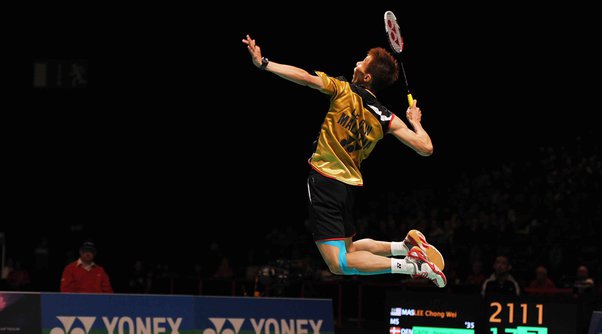
The forehand drop shot (slow or fast drop from the rear court) is one of the fundamental attacking and preparatory strokes in badminton. It is played from the rear court area, aiming for the shuttle to pass just over the net and drop steeply right behind the tape on the opponent's side. A correctly executed drop shot can catch the opponent completely off balance, especially if its preparation is deceptive and disguised as a powerful smash.
Why the Forehand Drop Shot is Essential
This stroke changes the rhythm of the game and forces the opponent to react lightning-fast in the front court. It allows you to:
- Disrupt the opponent's defense: If the opponent expects a hard smash and starts moving backward or dropping into a deep stance, the drop shot forces them to sprint forward.
- Gain attacking initiative: A precise drop shot forces the opponent to retrieve the shuttle low below net level, leading to a high lift that you can decisively finish in your next shot.
Basic Stance and Preparation
The key to a successful drop shot is that the preparation must look identical to a clear or a smash until the very last moment.
- Racket Grip: Use a relaxed basic grip.
- Body Position: Move quickly behind and underneath the shuttle, turning your torso sideways to the net with your non-racket shoulder pointing forward. Pull the racket back into the backswing with your elbow raised.
Execution Technique Step-by-Step
1. Deceptive Backswing
The movement begins with the rotation of the hips and torso forward, and the hitting arm's elbow moves ahead. The arm and forearm rotate outwards (supination) and the wrist bends back – to the opponent, this looks like a heavy attack at this stage.
2. Shuttle Impact and Power Control
The elbow straightens and the forearm rapidly rotates inwards (pronation). The critical difference from a smash occurs at the moment of contact: the arm and wrist relax, the swing slows down, and the racket face gently "strokes" or pushes the shuttle at the highest point in front of the body.
- Slow Drop: Flies with a higher arc and drops very close to the net.
- Fast Drop / Sliced Drop: The racket slices across the shuttle slightly, making it travel faster with a flatter trajectory, dropping slightly deeper into the court.
3. Follow-through
After impact, the racket naturally completes its movement downward and across the body toward the non-racket hip. Immediately return to the base position (center court) and be ready to react at the net.
Common Mistakes
- Telegraphed preparation: If you slow down your arm during the backswing, the opponent will read the drop instantly, sprint forward, and kill the shuttle at the net.
- Hitting too low or behind the body: If the shuttle drops too low, you lose the angle required to guide it precisely just over the tape.
- Stiff wrist: Gripping the racket too tightly robs the stroke of touch, resulting in the shuttle either hitting the net or flying too far and high.
Summary
- The forehand drop shot travels close to the net and drops steeply.
- Backswing preparation must be 100% deceptive and identical to a smash.
- Regulate power by relaxing fingers and wrist just before impact.
- Return to the ready stance immediately after playing the stroke.
Master the forehand drop shot and break down your opponent's defense with smart rhythm changes.