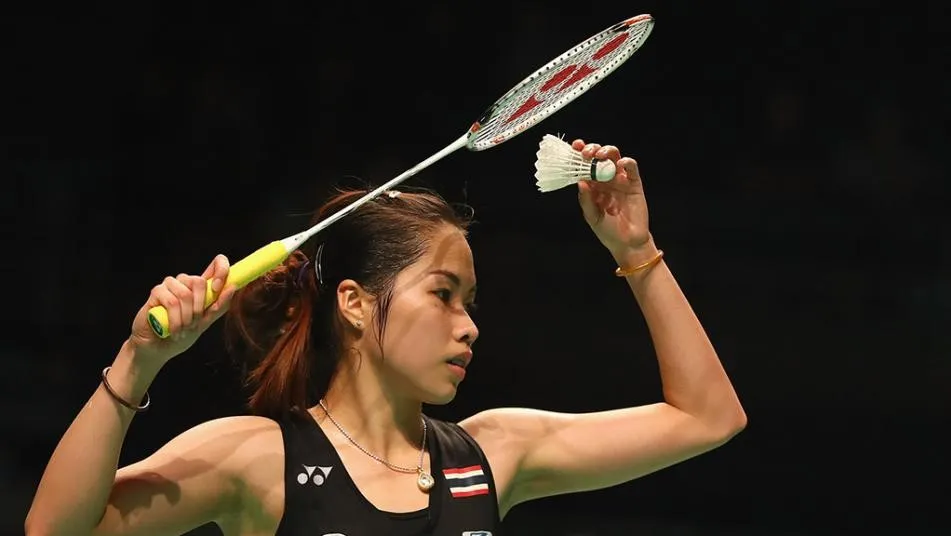
The high serve is a fundamental skill that every singles player must master, especially in the women's category . While short serves dominate in doubles, the goal in singles is to push the opponent as far from the net as possible to gain time for preparation.
A correctly executed high serve travels in a large arc and lands vertically near the opponent's back boundary line. If the serve is short or flat, it gives the opponent an immediate opportunity for a winning smash.
Why the High Serve is So Important
The aim is to force the opponent to the back of the court, eliminating their ability to attack downwards. At the same time, the shuttle's high flight path gives you enough time to return to an ideal base position and prepare for the return.
Basic Stance and Preparation
Preparing for a forehand service is more complex than for a backhand as it requires full-body involvement.
- Stance: Take a side-on stance inside the service court. Weight should be on the back foot.
- Grip: Use a relaxed basic grip.
- Shuttle and Racket: Hold both the racket and shuttle in an elevated position initially.
Execution Technique Step-by-Step
1. Backswing
Begin smoothly transferring your body weight from the back foot to the front foot. Simultaneously release the shuttle (slightly in front and to the side), lower the racket, and bend the wrist back with forearm supination.
2. Hitting Swing
Swing the racket forward in a wide arc. The key to power is accelerating the racket head through forearm rotation (pronation) and sharp wrist straightening at the moment of impact. Hit the shuttle in front of and beside the body.
3. Follow-through
The racket movement does not stop after impact but continues smoothly upwards. The swing's energy should carry the racket up over the opposite shoulder.
Common Mistakes
Low Flight Path
If the shuttle flies too flat (like a "drive"), the opponent can easily intercept it mid-court and attack immediately. The serve must have sufficient height.
Poor Aim
Many players serve too far to the sides. Tactically, it is more advantageous to aim the high serve closer to the center line. This reduces the angle for the opponent's return and makes it easier to cover their response.
Static Stance
Without transferring weight from foot to foot, the stroke lacks power and length. This results in a serve that lands mid-court, becoming an easy target for the opponent.
Coach's Tip
After playing a high serve, always move slightly towards the side you served to. This helps you better cover straight shots, which are the fastest returns.
Summary
- Use a basic grip and a side-on stance.
- Transfer body weight forward for necessary stroke length.
- Give the shuttle a high flight path so it falls vertically to the back line.
- Aim closer to the court's center for better control of the rally.
A quality high serve is your best defense. Master it and don't let your opponent attack from the very first bird.