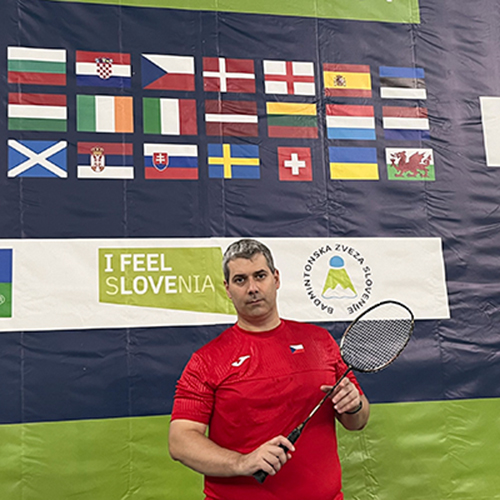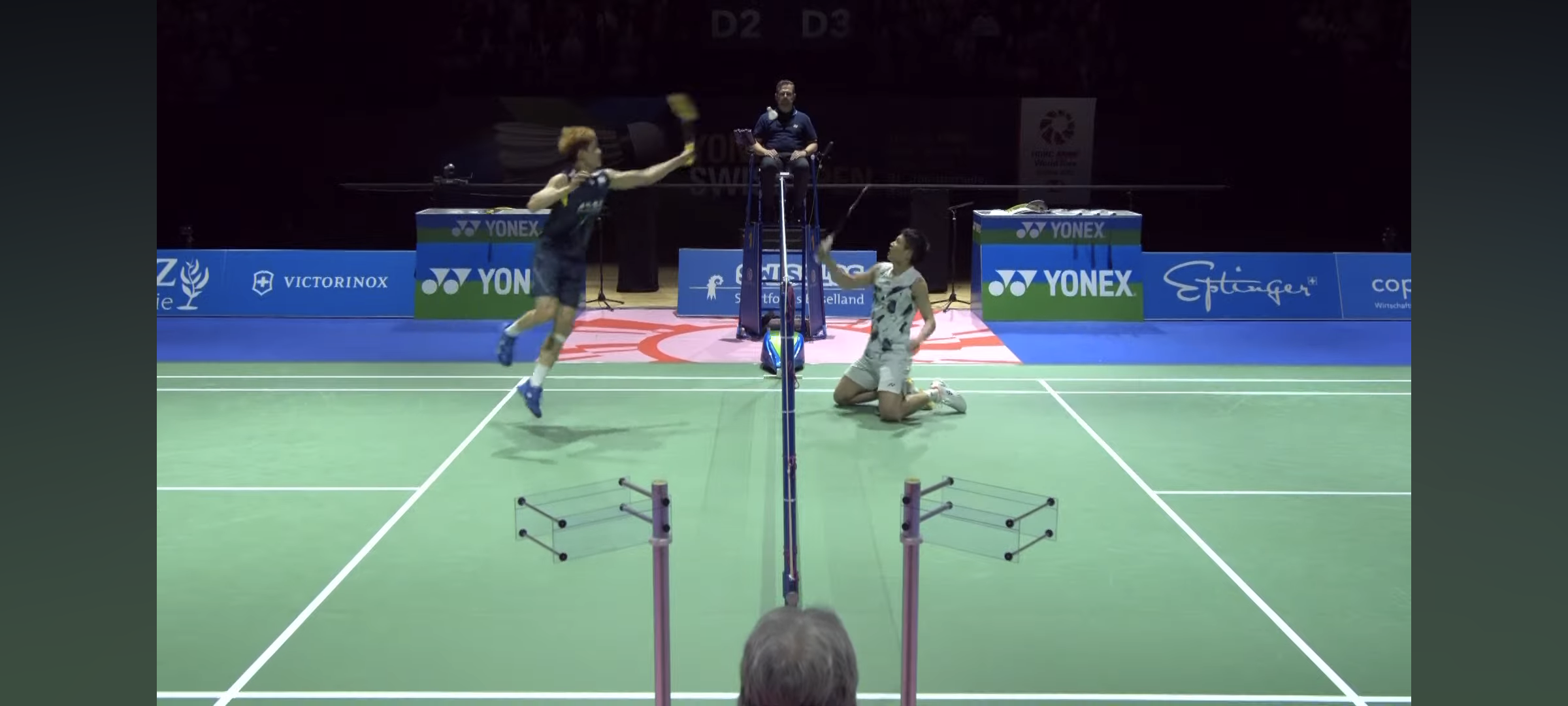
The forehand net kill is a definitive and most effective attacking solution in the front court. It is used in situations where you are close to the net and the opponent returns the shuttle too high – meaning above the level of the tape into your attacking zone. If a player masters this technique, they can immediately punish any inaccuracy by the opponent and decisively win the point.
Why the Forehand Net Kill is So Important
The shuttle travels at considerable speed downwards into the mid-court of the opponent after this stroke. The forehand net kill allows you to:
- End the rally immediately: The sharp downward trajectory gives the opponent almost no chance to react.
- Create enormous pressure: The stroke can be directed either into open space or straight at the opponent's body, leading to a forced error.
Basic Stance and Preparation
For the net kill, the speed of the start and correct, specific racket grip are crucial.
- Racket Grip: When preparing for a forehand net kill, immediately switch to the panhandle grip. This grip is ideal because the shuttle is located relatively far in front of the body.
- Movement: React lightning-fast to the high shuttle. Pull the racket in front of your body and make a quick, long lunge on the racket foot towards the net.
Execution Technique Step-by-Step
1. Backswing
The backswing is very short at the net. Bend the elbow and rotate the arm and forearm outwards (supination). The racket head is up, ready above net level.
2. Hitting Swing
Reach forward by rapidly straightening the elbow. Then lightning-fast rotate the arm and forearm inwards (forearm pronation) and powerfully hit the shuttle downwards. If you intercept the shuttle extremely close to the net, the racket movement must go "over the shuttle". With this shortened wrist snap, you reliably avoid forbidden contact with the net.
3. Follow-through and Immediate Guard
The arm relaxes after the stroke, and the kinetic energy of the racket rotates it further inwards. However, given the speed of the game, you must quickly return the racket to an elevated ready position in case the opponent reflexively returns the shuttle.
Common Mistakes
- Too large a backswing from the shoulder: A large backswing leads to hitting the shuttle late (low) or hitting the net. Power must come from a short, lightning-fast extension of the elbow and a finger squeeze.
- Net touch: If you do not control the follow-through of the racket after the stroke and swing too far forward, you risk touching the net. The movement must go sharply down and the wrist must stop it in time.
- Low racket recovery in guard: If you leave the racket hanging down low after the previous exchange, you will never catch the high shuttle at the net in time in the attacking zone.
Coach's Tip
When practicing, at the beginning a shadow training exercise with closed eyes fits perfectly, helping players gain a better feel for a short and controlled stroke execution. During the actual match, always consider the tactical options: whether to kill the shuttle flat down the line, cross-court, or straight at the opponent's body.
Summary
- the forehand net kill is a purely attacking stroke above tape level,
- it is necessary to use the panhandle grip for execution,
- the stroke execution is very short, power comes from forearm pronation and elbow straightening,
- lead the stroke "over the shuttle" at the net to avoid touching the net.
Master the forehand net kill and end rallies at the net with uncompromising confidence.